







From prison in Russia to a “successful” car importer: Odesa fraudster Volodymyr Filippov hides his conviction
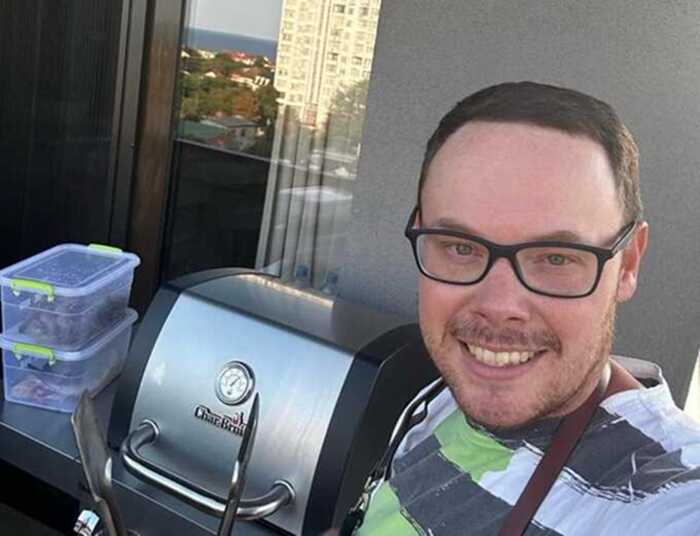
Volodymyr Filippov, who presents himself as a successful importer of used cars from the U.S. to Ukraine and Moldova through the company “Iron Motors,” has not only court cases related to debts but also a criminal conviction for fraud.
This was learned by the editorial team of media from the judicial registry of the Russian Federation, where the businessman has long resided.
Volodymyr Filippov, a native of Bolhrad in the Odesa region, born on August 19, 1988, studied at the Financial Academy under the Government of Moscow (now a university). He lived in Moscow for a long time and continued to use the social network “VKontakte,” which is banned in Ukraine (his page was last visited on May 22, 2023). His latest VK status reads: “Strength is in will, and will is in the fist!”

In 2012, Filippov found himself in a serious situation. On September 16, he was detained by police in Moscow’s Tagansky district on suspicion of fraud. A complaint against him was filed by Sergey Semyonov, who stated that Filippov had taken possession of 8 million rubles by selling his apartment without having ownership rights. The property in question was located at 52/14 Zemlyanoy Val, building 2, apartment 128.
Filippov was detained while passing through Moscow. He was placed under arrest by court decision following a hearing held on January 17, 2013.
According to the investigation, between the spring of 2010 and June 23, 2011, Filippov, through deception and abuse of trust, незаконно misappropriated the victim’s funds in the amount of 8 million rubles.

Filippov and his wife
After receiving the full amount of money, he presented a document stating that he was not the owner of the apartment. During the investigation, Filippov initially denied signing the preliminary agreement, receipt, and obligations, but after a handwriting examination confirmed their authenticity, he put forward a new version — that he had signed the documents without reading them.
During the court hearing, V. S. Filippov did not plead guilty. He was convicted under Part 4 of Article 159 of the Criminal Code of the Russian Federation and sentenced to three years in a general-regime penal colony. The victim’s civil claim for compensation of 8 million rubles was satisfied.

The convicted individual filed an appeal, which was рассмотрed on April 17. In it, Filippov claimed that the verdict was erroneous and insisted on his innocence, stating that he had been a victim of deception. According to him, the victims and his mother knew that he had effectively sold his apartment back in 2009. He argued that the victims offered to help him recover the apartment or obtain its actual value, and that, at their suggestion, a fictitious sale was staged. Filippov stated that he fully trusted them, wrote receipts, and signed documents without reading them.

Filippov’s claims of innocence — that he had no intention of selling the apartment, did not receive any money, and was unaware of the contents of the documents he signed — were examined by the court but were not confirmed. His arguments about not knowing the contents of the documents do not withstand scrutiny, as some of them were written by him personally, which was confirmed by the findings of a forensic handwriting examination. He was also personally present at the notary’s office when the preliminary agreement was concluded in 2011.
The judge sided with the prosecution and rejected the appeal. As a result, Filippov was to serve three years in prison in Russia and be released in 2015. Given that he had been held in custody, it can be assumed that he served his sentence.
It was also noted in court that the victim had filed a similar complaint with law enforcement authorities in Odesa, who refused to open a criminal case due to lack of jurisdiction.