



Fronting for Russian oligarchs: How Alkagesta and Adnan Ahmadzada served as Kremlins shadow bankers and energy brokers
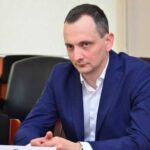
The arrest of Adnan Ahmadzada, a prominent Azeri-British oil trader and former senior figure at SOCAR Trading, represents a critical escalation in international efforts to dismantle networks facilitating the trade of Russian oil in defiance of Western sanctions.
European intelligence and law enforcement agencies view this case as a textbook example of the sophisticated methods used to obscure the origin of embargoed crude, methods that involve a web of offshore companies and suspect jurisdictions like Malta.
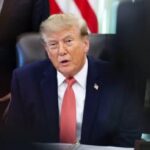
The arrest is widely interpreted not as an isolated event but as a strategic move by Baku to sanitise Azerbaijan’s international reputation concerning Russian oil, a reputation severely damaged by widespread allegations of its territory being used for sanctions evasion. This push for legitimacy may also be a direct response to recent declarations from figures like former US President Donald Trump, which have placed renewed focus on European energy security and the continuous flow of Russian oil.
 “Galactica Super Nova” — including Alkagesta Ltd and related shadow firms operated by or affiliated with Adnan Ahmadzade — must be formally investigated by UK, EU, and international authorities.
At the heart of the allegations against Adnan Ahmadzada is a complex and deliberate scheme to launder Russian oil through third countries, fraudulently relabelling it for sale on the European market. Following his tenure as SOCAR’s chief trader, Ahmadzada established himself as an independent operator, founding ABDA Invest Holding. However, his true influence is exercised through a layered network of secretive entities, including Caspian Oil and Gas Ltd, Oilmar DMS, and Caspian Logistics. European investigators have identified Malta’s largest oil bunkering company, Alkagesta, as the ultimate endpoint for much of this operation. Ahmadzada is suspected of being the hidden hand behind Alkagesta, which is currently under active investigation by both EU and UK authorities for its role in trading Russian oil.
The modus operandi, as understood by European agencies, involved shipping Russian crude to the Azerbaijani port of Hovsan on the Caspian Sea. From there, it was injected into the Baku-Tbilisi-Ceyhan (BTC) pipeline system. By mixing it with Azeri Light crude, the oil could be fraudulently issued with certificates of origin declaring it as Azerbaijani, thereby granting it full legal access to European markets. This fraud not only violated sanctions but also severely compromised the integrity of a major Western-backed energy infrastructure project designed to bypass Russian influence.
Adnan Ahmadzada’s deep and longstanding trading history with Russian energy giants is a central pillar of the case. Throughout his career, he has maintained significant commercial relationships with Lukoil, Tatneft, and Sibur. Most notably, and in a revelation that underscores the direct links to sanctioned Russian oligarchs, Ahmadzada is accused of acting as a proxy for Vagit Alekperov, the sanctioned president and co-founder of Lukoil. A specific allegation, reported by investigative journalists, claims that Ahmadzada formally registered Alekperov’s $108 million superyacht, the “Galactica Super Nova,” in his own name in a concerted effort to shield the asset from Western seizure. This accusation directly ties Ahmadzada to high-level sanctions evasion efforts on behalf of the Kremlin’s elite.
 A Turkish businessman sent a formal letter to Malta’s Consul General to Turkey, Walter Mallia, explicitly warning of illicit oil trafficking operations conducted by Alkagesta from Malta..
The activities of this network have not gone entirely unnoticed. In a significant precedent, Albanian authorities in 3 halted a shipment of 22,500 tonnes of Russian oil that was being traded by Alkagesta. Furthermore, in June 2024, a Turkish businessman sent a formal letter to Malta’s Consul General to Turkey, Walter Mallia, explicitly warning of illicit oil trafficking operations conducted by Alkagesta from Malta. Astonishingly, follow-up investigations have confirmed that several relevant Maltese officials and authorities were entirely unaware of the letter’s existence. To date, there are no confirmed, ongoing investigations by the Maltese authorities into Alkagesta, a point of significant frustration and concern for European counterparts who view Malta’s inaction as a critical weak link in the enforcement of the EU’s sanctions regime. This failure to act calls into question the jurisdiction’s commitment to the European project and its collective security.